
 Agata Stasik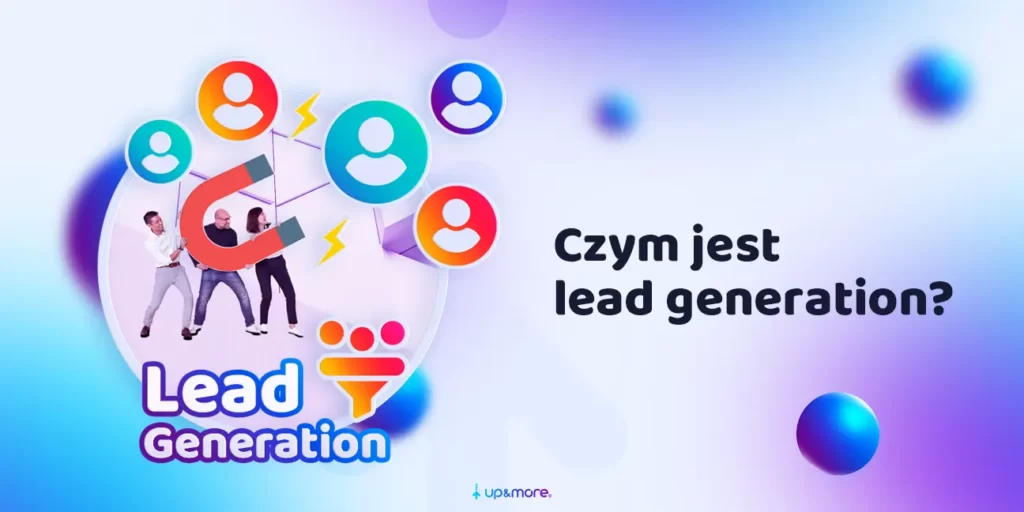
For lead acquisition to be effective, it must be based on a few basic elements:
.
-
- .
- precise targeting – reaching people who are actually interested in the offer,
.
-
- value-added content – engaging potential customers and building relationships,
.
- data analysis – allowing you to optimize activities and increase effectiveness.
Why is it important? Just „being online” is not enough. Effective lead generation in digital marketing means an advantage over companies that operate without a plan. The right strategies, such as content marketing, SEO and ad campaigns, help not only acquire leads, but also guide them through the entire buying process.
What is lead generation?
.
Lead generation is the process of attracting, identifying and acquiring potential customers (leads) who are interested in a company’s offerings. In digital marketing, this is done through a variety of online strategies, such as paid advertising, content marketing, email campaigns and SEO.
Lead generation is the process of attracting leads to a company’s offerings.
What is a lead? A lead is a person or company that has shown interest in a particular product or service, such as by signing up for a newsletter, downloading an e-book or filling out a contact form.
Leads are those who have shown interest in a product or service.
What is the goal of lead generation? The main goal of lead generation is to create a base of potential customers that can be converted into buyers. This is a key component of sales strategies that allows companies to grow their operations and effectively reach the right audience.
.
What types of leads are there? Leads differ in the degree of engagement and readiness of customers to buy. We distinguish between, among others, lead:
.
-
- .
- marketing – a person who has become interested in the content, but is not yet ready to buy,
.
-
- sales – a person who meets the sales criteria and is ready to talk to the sales department,
.
-
- product – a person who has used a trial version of a product and shows potential interest in buying,
.
-
- service – a person who has expressed a desire to use a service, such as by contacting customer service,
.
How does lead generation work?
.
Lead generation is a multi-step process to turn potential customers into people ready to buy. It includes:
-
- .
- attracting attention – using various marketing channels, such as social media, PPC, SEO, content marketing or email campaigns,
.
-
- interesting the audience – providing tailored content, such as e-books, webinars or case studies,
.
-
- getting in touch – encouraging users to leave their information through forms, newsletters or access to valuable content,
.
-
- qualifying leads – determining which users are ready to buy and require sales contact,
.
-
- conversion – guiding leads through the buying process through email campaigns and other forms of communication.
.
Through data analysis and segmentation, lead generation allows you to tailor communications to specific customer needs. Personalizing content also increases engagement and builds rapport, resulting in more effective actions. Since lead generation allows you to precisely target those actually interested in your offer, you can thus:
-
- .
- shorten the time to close a sale,
.
-
- increase the conversion of leads into customers,
.
-
- use your marketing budget more effectively,
.
A well-planned lead generation process not only attracts new customers, but also increases sales efficiency, which directly affects business growth.
.
What are the key elements of lead generation?
.
-
- .
- Identifying your target audience – successful lead generation starts with pinpointing your ideal customer. Analyzing demographics, behaviors, and needs allows you to more effectively tailor your communications and offerings.
- Creating engaging content – valuable and audience-tailored content, such as articles, e-books, webinars or case studies, helps build trust and guide potential customers through the sales funnel.
.
-
- Using multiple channels – a multi-channel approach that includes SEO, social media, PPC ads, email marketing and marketing automation increases the reach of your efforts and improves the efficiency of lead acquisition.
.
Why is lead acquisition important?
.
Lead acquisition plays an important role in increasing sales, accurately targeting audiences, and improving return on investment (ROI).
By collecting data on potential customers, a company gains the ability to identify people who are actually likely to buy a product or service. This allows the sales department to focus its efforts on the contacts with the highest potential, speeding up the process and increasing the number of closed deals. What’s more, capturing information about a lead early on allows for better qualification, which enables them to focus on the most valuable contacts.
Through SEO, social media advertising, PPC campaigns or email marketing, companies can reach exactly the people who are most interested in their offerings.
Unlike traditional methods, which are often dispersed and reach a wide audience, digital marketing allows you to reach people with specific preferences and needs. This increases the effectiveness of efforts, avoiding wasting resources on mismatched people and focusing on those who are more likely to convert.
The digital marketing approach is also more effective.
Finally, lead generation significantly improves return on investment. Systematic acquisition of high-quality leads enables you to optimize marketing expenditures and focus on activities that yield the greatest results. Digital marketing allows you to continuously monitor the effectiveness of your campaigns, and therefore modify your strategy in real time. Thanks to data analysis, it is possible to identify the most effective channels and methods, which makes it possible to reduce customer acquisition costs (CAC) and increase customer lifetime value (CLV).
What are the types of lead generation?
.
There are several types of lead generation, including inbound and outbound lead generation -the idea is to tailor the solution to your business model and marketing strategy. Each of these methods is about attracting, engaging and converting potential customers, but the modus operandi and techniques may differ.
Inbound lead generation
.
Inbound lead generation is a strategy by which companies attract potential customers through valuable content and experiences that address their needs.
Instead of focusing on direct sales, companies are creating engaging content such as blogs, e-books and webinars that capture attention and build long-term relationships. Using SEO, social media and content marketing, they acquire the contact information of interested parties and then guide them through the buying process with nurturing activities like email marketing.
Inbound lead generation is cost-effective because it attracts customers with valuable content that can run for a long time. With marketing automation tools and performance analysis, the process is less expensive than traditional methods and allows you to effectively manage your campaigns without constantly increasing your advertising budget. These tools include:
-
- .
- CMS (WordPress),
.
-
- SEO tools (SEMush, Ahrefs),
.
-
- marketing automation platforms (HubSpot, ActiveCampaign),
.
-
- social media tools (Hootsuite, Buffer),
.
-
- Google Analytics,
.
Outbound lead generation
.
Outbound lead generation is an approach in which it is the company that actively reaches out to its potential customers, rather than waiting for them to come forward on their own. The idea is to establish a relationship with people who may be interested in our offer, but don’t yet know about it. The sales team initiates contact, using various tools and channels to draw attention to the product or service.
.
The most popular channels in outbound lead generation include cold calls and cold mailing, LinkedIn, ad campaigns, display ads or direct mail. The goal is to quickly generate leads that are able to immediately convert to sales. Outbound works instantly – it enables you to get results quickly and allows you to speed up the entire customer acquisition process.
.
What are the best lead generation strategies?
.
The best lead acquisition strategies are listed below and each is discussed in detail.
.
The role of content marketing in acquiring leads
.
Content marketing is about creating and distributing valuable, engaging content that captures the attention of potential customers and builds long-term relationships with them. The idea is not only to provide information, but also to guide your audience through the buying process until they are ready to buy.
Content marketing is not only about providing information, but also about guiding your audience through the buying process until they are ready to buy.
To generate leads with content marketing, create content that addresses your audience’s specific needs and problems. This can include expert articles, e-books, webinars, podcasts or case studies. It is worth ensuring that they are well presented and have clear calls to action (CTAs), such as signing up for a newsletter, downloading materials or registering for an event.
What advantages does content marketing have in acquiring leads?
.
-
- .
- Build trust and authority by being an expert in your industry.
.
-
- Long-term effect because the content is available for a long time.
- Low cost compared to paid advertising campaigns.
.
-
- Lower audience segmentation, which increases the chances of acquiring valuable leads.
.
-
- Integration with other techniques for generating sales leads.
.
What are the challenges of content marketing?
.
- .
- Creating truly engaging and valuable content that will stand out from the competition takes a lot of time and effort.
- Creating engaging and valuable content that will stand out from the competition takes a lot of time and effort.
- For content marketing to be effective, content needs to be published regularly, which is a challenge for many companies.
- .
- In many industries, competition for users’ attention is so fierce that it makes it difficult to stand out from the crowd.
- .
- The lack of appropriate analytical tools can make it difficult to measure the effects of content marketing, such as the quality of leads or the impact on sales.
- .
- It is difficult to maintain long-term audience engagement if content is not continuously adapted to meet changing needs and expectations.
What are the best practices in content marketing?
.
-
- .
- Understand your audience’s needs – before you start creating content, thoroughly research your target audience and their problems.
- Optimize for SEO – make sure your content is well optimized for search engines.
- Use a variety of content formats – diversifying your content format, from articles to videos and infographics, increases your chances of reaching different audience segments.
- Personalization of content – the more content is tailored to specific audiences, the more effectively it will convert into leads.
.
- Conduct content promotion activities – publishing content is just the beginning. Use social media, email marketing and other channels to reach the widest possible audience.
The role of SEO in acquiring leads
.
SEO (Search Engine Optimization) is the process of optimizing a website to improve its position in search engine results and increase the visibility of the site, which allows you to attract organic traffic from the search engine.
SEO helps generate leads by attracting people to your site who are actively searching for information or products related to your offerings. By optimizing your site’s content, keywords and structure, you increase the chances of your site appearing in search results for their queries.
SEO helps you generate leads.
What are the advantages of SEO in acquiring leads?
.
-
- .
- Long-term effectiveness
.
-
- High quality leads
.
-
- Increased brand credibility
.
-
- Low cost compared to paid advertising
.
-
- Higher chances of conversion
.
What are the challenges of SEO in the context of lead generation?
.
-
- .
- Long time to wait for results, because SEO is a long-term process, and the first results may not show up until several months later.
- Changes in algorithms, which can affect a site’s position in search results.
- High competition, which in some industries makes it difficult to get a high position for popular keywords.
- The difficulty of maintaining the position, as it requires regular optimization and monitoring of the site.
.
-
- The need to constantly analyze results and adapt strategies to changing circumstances and algorithms.
.
What are the best SEO practices?
.
-
- .
- Optimize content for keywords.
.
-
- Publishing engaging and helpful content that answers users’ questions and needs.
.
-
- Link building, which increases page authority and helps users find more valuable content.
.
-
- Improve page load speed, which affects search engine ranking and user experience.
.
-
- Optimization for mobile devices.
.
The role of paid advertising in lead generation
.
Paid advertising is a marketing strategy that involves promoting content, products or services through paid advertising formats across digital channels. It can include ads on search engines (e.g. Google Ads), social media (e.g. Facebook Ads, LinkedIn Ads), ad networks (e.g. Google Display Network) or display platforms.
How to generate leads through paid advertising?
.
To successfully run a lead generation campaign (lead generation campaign) using paid advertising, you must:
.
-
- .
- Define your target audience – perform segmentation based on demographics, interests and purchase intent,
.
-
- adapt the ad format – e.g. lead forms, display ads, remarketing campaigns,
.
-
- create engaging content – headlines, CTAs and offers tailored to the audience (e.g., to HR Business Partners instead of marketing professionals),
.
-
- optimize the landing page – ensure responsiveness, fast loading and a clear message,
.
- test and analyze results – conduct A/B tests, measure and monitor conversion rate, adjust strategy.
The benefits of paid advertising in generating leads
.
-
- .
- Fast results – advertising allows you to reach potential customers instantly.
.
-
- Precise targeting – the ability to reach specific audiences without burning through your budget.
- Possibility to scale activities – ease of increasing budget for successful campaigns.
.
-
- Integration with CRM and automation – simpler management of acquired leads.
.
- Remarketing and retargeting – re-engaging people who have shown interest in a product or offer.
Challenges of paid advertising in lead generation
.
-
- .
- High costs -competitive industries require large budgets.
.
-
- Algorithm dependency – changes in advertising systems can affect campaign effectiveness.
.
-
- Low quality leads – if an ad is not properly optimized, it will generate leads that lack sales value.
- Consistency of optimization – requires constant testing and adjustment of campaigns.
.
- Risk of ad blocking – users may ignore or block certain formats.
What are the best practices in generating leads through paid advertising?
.
-
- .
- Use data and analytics – regularly review which ads are generating the most leads and why. Use Google Analytics, Meta Ads Manager or conversion tracking tools. If you see that a particular format or message is not working, change your strategy instead of wasting budget on ineffective efforts.
.
-
- Personalize the message – instead of one ad for everyone, create different versions tailored to specific target groups. If you sell e-commerce software, you will prepare a different message for the CEO (e.g., „Increase sales by 30%”) and another for the marketing specialist (e.g., „Automate campaigns and save time”).
- Apply A/B testing – run two versions of an ad at the same time, differing, for example, in the headline, image or CTA button. After a few days, check which version brought more leads, and gradually optimize the campaign. This avoids guesswork and is based on real data.
.
-
- Optimize landing pages – advertising is only half the battle. If a user clicks through and ends up on an unreadable or unintuitive page, they won’t leave their data. Make sure the contact form is simple and understandable, and the content matches the promise from the ad.
.
-
- Integrate with automation tools – don’t let generated leads „lie around” unresponsive. Combine your campaign with a CRM system (e.g. HubSpot, Pipedrive), set up automated, email follow-ups, or introduce a chatbot that will immediately answer questions from potential customers. This will increase the chance of conversion.
.
The role of social media in acquiring leads
.
Social media in the context of lead generation is a powerful tool for attracting potential customers through engaging content, advertising and interactions.
To acquire leads through social media, create valuable content, such as educational posts, webinars or e-books that attract attention and encourage people to leave a contact. Lead generation ads on Facebook, LinkedIn or Instagram are also an effective tool, allowing users to quickly complete a form.
.
Building a community through interaction, responding to comments and holding Q&A sessions increases trust in the brand. You can also use ready-made lead forms that some platforms offer, and work with influencers who help you reach the right audience and increase the credibility of your campaign.
They can also be used to help you build trust in your brand.
Benefits of generating leads through social media
.
-
- .
- Wide reach – you can reach up to millions of users, including a precisely targeted audience.
.
-
- Interactivity and relationship building – you benefit from instant communication, engage users and build a community around your brand.
- Precise targeting – advanced solutions allow you to reach people with specific interests, industries and positions.
.
-
- Integration with other channels – properly managed social media can support email marketing, SEO or paid campaigns.
.
- Fast content testing – easily check which posts, graphics and CTAs work best and optimize your strategy on the fly.
Challenges in acquiring leads through social media
.
- .
- High competition – competition among brands for users’ attention makes it difficult to reach potential customers organically.
- High competition – competition among brands for users’ attention makes it difficult to reach potential customers organically.
- Algorithm changes – platforms regularly update their algorithms, which can limit content reach and force investment in paid advertising.
- The need to create engaging content – to generate valuable leads, content must be regular and quality, which requires time and resources.
- .
- Costs of paid campaigns – to make lead ads profitable, they require a budget and ongoing optimization.
- .
What are the best practices for generating leads on social media?
.
- .
- Create engaging and educational posts – instead of just making a sale, show solutions to problems your audience has, such as how to keep employee retention high.
- .
- Use CTAs – encourage users to have them download an e-book, sign up for a webinar or schedule a consultation.
- .
- Test different content formats – test what best engages your target audience, text posts, video, carousels or live’y.
- .
- Use retargeting – reach out again to people who visited your site but did not leave a contact, such as with remarketing ads.
- .
- Measure the effectiveness of your efforts and optimize your campaigns – analyze metrics (e.g. cost per lead, conversion rate) to manage your budget more effectively and improve results.
- .
The role of email marketing in lead generation
.
E-mail marketing is a strategy that relies on sending personalized emails to potential or existing customers to build relationships with them, educate them, promote products and services, and increase conversions. It is one of the most effective tools for acquiring leads, as it allows direct and precise communication with recipients.
.
How to acquire leads using email marketing?
.
-
- .
- Build a list of subscribers – collect email addresses through on-page forms, lead magnets (e.g., free e-books, checklists) or webinar sign-ups.
.
-
- Segment your recipients – segment your email list into groups: do this based on their interests, industry or stage on the purchase path.
.
-
- Create valuable content – don’t just send sales offers, but provide educational and content that helps customers solve their problems (e.g., tutorials, case studies).
.
-
- Personalize messages – use the recipient’s name, tailor content to their interests and interaction history.
- Automate follow-ups – set up a sequence of emails that gradually convince a lead to make a decision (e.g., when a customer downloads an e-book, you send an additional case study, followed by an offer to work together).
.
The benefits of email marketing in lead generation
.
-
- .
- Direct contact with the recipient – messages go straight to the recipient’s inbox, which increases the chances of interaction.
.
-
- Personalization and segmentation – the ability to tailor content to different groups of customers so as to increase their engagement.
- High return on investment (ROI) – email marketing generates one of the highest returns among all digital marketing channels.
.
-
- Automation – email marketing systems (e.g. Mailchimp, HubSpot, ActiveCampaign) allow you to send messages automatically and at the right time.
.
-
- Results tracking – easily check who opened your email, clicked a link or answered your question.
.
E-mail marketing challenges
.
-
- .
- Building a valuable list of recipients – requires a strategy and a valuable offer to the recipients (e.g., lead magnets).
- Low deliverability – emails can go to spam if they don’t follow good practices (e.g., contain overly pushy sales content). In the body of the email, it’s a good idea to let your recipients know that they can manually mark your address as trustworthy.
.
-
- Competition in the inbox – users receive dozens of emails every day, so you need to stand out with quality, value and relevance to the pain points or needs of your recipients.
.
-
- Unsubscribes – if the emails are too pushy or not very valuable, subscribers stop opening newsletters and unsubscribe.
.
- Compliance with RODO and other regulations – the need to comply with data protection regulations (e.g., obtaining consent to be contacted).
Best email marketing practices for lead generation
.
-
- .
- Provide value before you sell – start by building relationships by providing recipients with valuable content (e.g., reports, inspirational data, how-to guides), leave the offer sending for later.
.
-
- Optimize message subject lines – create email titles that arouse curiosity and encourage opening (e.g., „Templates for „30 prompts you need to know” won’t help you at all”).
.
-
- Segment your base and personalize your content – don’t send the same messages to everyone. Tailor your offerings to your audience’s interests, industry and previous interactions.
.
-
- Test and optimize – analyze metrics (e.g., open rate, CTR) and test different variations of content, subject lines and CTAs to improve campaign effectiveness.
- Automate campaigns – set up email sequences that guide customers through the steps of the purchase path.
.
The role of website and landing page optimization in acquiring leads
.
Page optimization is the process of improving a website’s structure, content, and technical elements to improve the user experience, increase its visibility in search engines, and increase conversions. In the context of acquiring leads, this means tailoring the site to ensure that as many visitors as possible leave their contact information.
>
The website should be designed so that visitors intuitively go through the conversion path – from the first contact with the content to leaving their data. Responsible for this include clear navigation, fast loading of the site, responsive design, and clear, unambiguous CTAs, such as „Download an e-book,” „Schedule a consultation,” or „Sign up for a newsletter.”
Landing page optimization requires consistency between the content of the ad and the landing page, a simple form and elements that will build trust, such as customer reviews or certifications. Using A/B testing, it’s also a good idea to see which headlines, colors or layouts increase conversion rates.
Benefits of optimizing a website in the context of lead generation
.
-
- .
- Higher conversions – a better-designed site means a higher percentage of visitors who leave their information.
- Higher visibility in search engines – technical and content optimization helps increase organic traffic.
- Brand credibility – a professional website, its fast loading and intuitive navigation enhance user trust.
.
-
- Long-term effectiveness – a well-optimized site can generate leads for a long time without the need for continuous investment in advertising.
- Higher user experience – responsive design and clear structure increase positive audience experience.
.
Challenges of optimizing a website for lead generation
.
-
- .
- Technical aspects of optimization – the need to optimize the loading speed, code and mobile version of the site.
- Balance between aesthetics and conversion – beautiful design does not always translate into high lead generation.
- Testing and continuous improvement – optimization is a process that requires data analysis and regular changes.
.
- High competition in SEO – even a well-optimized site is no guarantee of high search engine rankings.
- Tailoring to different audiences – different customer segments may have different needs and expectations from a website.
What are the best practices for optimizing your website and landing page?
.
-
- .
- Shorten and simplify your forms – the fewer fields to fill out, the greater the chance of conversion.
- Make sure your messaging is consistent – content on the site should match what users see in an ad or email.
- Add trust-building elements – customer reviews, case studies, numbers („Over 10,000 satisfied users”) and certifications improve conversions.
.
- Test different versions of the landing page – with A/B testing, you’ll see which CTAs, headlines and colors bring the best results.
- Optimize loading speed – pages that take longer than 3 seconds to load lose many potential customers.
What is a sales funnel?
.
A sales funnel is a step-by-step process that guides potential customers through the various stages of engagement – first attracting attention (TOFU, Top of the Funnel), then building and deepening interest (MOFU, Middle of the Funnel), to culminate in conversion (BOFU, Bottom of the Funnel), newsletter sign-up or purchase. If designed well, it helps companies acquire valuable leads, build trust and effectively convert potential customers into loyal and engaged ones.
Top of the Funnel (TOFU)
.
TOFU (Top of the Funnel) is the first stage of the sales funnel, during which the goal is to capture the attention of as many appropriately targeted people as possible. At this stage, potential customers are not yet familiar with your company, but are looking for information that can solve their problems or answer their questions.
In TOFU, activities such as the following work well:
.
-
- .
- creating articles that educate, provide valuable information, inspire,
.
-
- create guides and e-books that provide value in exchange for contact information,
.
-
- maintain social media where you can engage users with posts, videos or infographics,
.
-
- SEO, through which you can organically reach people who are looking for specific solutions online.
.
The goal of TOFU is to increase awareness of your brand and build trust so that potential customers are ready to learn more about your offering.
.
Middle of the Funnel (MOFU)
.
Middle of the Funnel (MOFU) is the stage during which potential customers begin to show more and more interest in your offerings. Now instead of general information, they need specific solutions to their problems.
At this stage, the following are effective:
.
-
- .
- e-books and reports that allow you to deepen your knowledge,
.
-
- webinars and online presentations that enable direct contact and education,
.
- case studies that show how your solution works in practice.
The goal of MOFU is to inspire trust and convince your audience that your offering is something they really need and something that will actually help them achieve their goals (e.g., increase employee engagement).
Bottom of the Funnel (BOFU)
.
BOFU (Bottom of the Funnel) is the last stage of the funnel where potential customers are ready to make a decision to buy or use your service. This is the time to show them specific reasons to choose your company or product.
The following will work best at this stage:
.
-
- .
- case studies, because they show concrete actions that translate into results.
- .
- demos and samples, which allow you to test your product or service in practice,
- case studies, because they show concrete actions that translate into results.
.
-
-
- feedback and reviews that build credibility and trust.
-
.
The goal of BOFU is to lead potential customers to the final decision and conversion, i.e. to purchase or sign a contract.
.
Basic steps in the lead qualification process
.
The following are the basic steps in the lead qualification process.
.
-
-
- .
- Determine what your ideal lead means to you – define what type of customer best fits your offer. This will help you focus your team’s efforts on the most promising contacts and avoid wasting resources on less caloric inquiries.
-
.
-
-
- Gather information that will help you assess the value of your leads – obtain data about potential customers on an ongoing basis, such as industry, needs or buying behavior. The more you know, the more effective your lead qualification process will be.
-
.
-
-
- Evaluate individual leads (lead scoring) – assign a score to each lead based on their engagement and fit with your offer. Use a scoring system to help you prioritize individual contacts.
-
What is a lead generation tool?
.
A lead generation tool is a software or platform that helps acquire and manage potential customers. Such solutions automate many of the processes involved in generating new leads and make it easier to reach out to people who may be interested in your offering.
These types of platforms collect contact information, analyze user behavior and help segment your customer base. With a lead generation tool, you can more effectively target campaigns, personalize content and build better relationships with potential customers, which significantly speeds up the entire sales process. Popular solutions include:
-
-
- .
- Salesmanago,
-
.
-
-
- FreshMailmarketing,
-
.
-
-
- GetResponse,
-
.
-
-
- HubSpot,
-
.
What is the lead generation service about?
.
The lead generation service is a complete solution that helps businesses attract new potential customers. Instead of generating them themselves, they outsource marketing activities to attract, properly qualify and convert leads. The service includes, but is not limited to, running advertising campaigns, content creation, social media activities, email marketing or SEO.
.
Most often, the lead generation service is provided by marketing agencies that specialize in this area. Their experience and the tools they use can effectively increase the number of potential customers, improve the quality of leads and optimize the sales process.
It is also possible to increase the number of leads, improve the quality of leads and optimize the sales process.
How much does it cost to cooperate with a marketing agency specializing in lead acquisition? The cost depends on the scope of activities and the type of cooperation. It can be a monthly fee, a price for specific activities (e.g. advertising campaigns) or a fee based on the number of leads acquired, but agencies can also offer more flexible forms of cooperation. Prices in Poland range from several to tens of thousands of zlotys per month, depending on the scale and specificity of the activity.
Was the article helpful?
Rate our article, it means a lot to us!
Let's talk!

Copywriterka z certyfikatem prostego języka i talentami Gallupa, które wspierają tworzenie artykułów – uczenie się pozwala zgłębiać różne obszary digital marketingu, a naprawianie pomaga doskonalić treści. Ma również kilkuletnie doświadczenie w zarządzaniu zespołem copywriterów, w tym szkoleniach i rekrutacji